How to Change Your Car's Oil and Filter at Home
To change your oil at home, warm the engine for a few minutes, raise the car safely on ramps or jack stands, drain the old oil through the drain plug and swap the oil filter. Then refit the plug with a new washer, refill with the oil your owner's manual specifies, run the engine and check the level and for leaks. With the right tools and a little care, it's one of the best first DIY jobs on a car.
What you need
- The right oil, in the right amount. Your manual lists the viscosity grade (for example 0W-20 or 5W-30), the specification or carmaker approval it must meet, and the capacity with a filter change.
- A new oil filter for your exact engine
- A new drain plug washer (crush washer), or a new drain plug if your car uses a single-use plastic one
- A six-point socket or wrench that fits the drain plug snugly
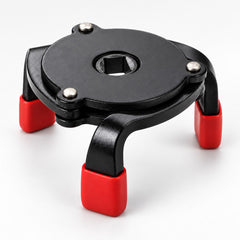
- An oil filter wrench, such as a 3-jaw oil filter wrench (60-95 mm), and a 3/8-inch ratchet
- A drain pan that holds more than your engine's oil capacity, a funnel, and rags or cardboard
- Jack stands and a jack, or drive-on ramps, plus wheel chocks
- Nitrile gloves and eye protection
- A torque wrench for the drain plug
- Sealable containers for the old oil (the new oil's empty bottles work well)
Before you start
Check the oil spec in your manual
Two things matter: the viscosity grade and the specification. The grade is the familiar "5W-30" style number. The specification is a performance standard printed on the bottle, such as an API or ILSAC rating in North America, an ACEA class in Europe, or a carmaker's own approval code. Many engines, especially European ones, call for a specific approval, so the right grade alone isn't always enough. While you're in the manual, note the oil capacity and the drain plug torque.
Warm, not hot
Warm oil is thinner, so it drains faster and more completely. Run the engine for a few minutes, then switch it off. After a proper drive, the oil, the exhaust and the drain plug can be hot enough to burn you, so let the car cool for a while first.
Lift the car safely
Some trucks and SUVs sit high enough to reach the drain plug and filter without lifting. Most cars don't. If you need to go under:
- Park on firm, level ground and chock the wheels that stay on the ground.
- Lift at the jacking points shown in your manual and lower the car onto jack stands, or drive it up a pair of ramps.
- Never get under a car held up only by a jack.
- Before you slide underneath, give the car a firm push to check it's stable.
How to change your oil step by step
Step 1: Remove the oil filler cap
Open the hood (bonnet) and take off the oil filler cap. Letting air in helps the oil drain smoothly.
Step 2: Find the right drain plug
The drain plug (sump plug in the UK) is a bolt at the lowest point of the engine's oil pan. Some cars hide it behind a plastic undertray with an access flap. Make sure it's the engine oil pan and not the transmission: draining the gearbox by mistake and then overfilling the engine is a classic first-timer error. If in doubt, check the manual or a diagram for your engine.
Step 3: Drain the old oil
- Put on gloves and eye protection.
- Place the drain pan a little to the side of the plug, in the direction the oil will flow. It comes out in an arc, not straight down.
- Loosen the plug counterclockwise with a snug six-point socket.
- Unscrew the last turns by hand while pressing the plug inward, then pull it away quickly so the oil doesn't run down your arm.
- Let it drain until the stream slows to an occasional drip.
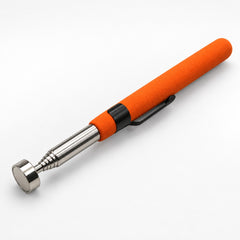
Dropped the plug into the pan? A steel plug can be fished out with a telescopic magnetic pickup tool instead of your fingers. It won't pick up aluminum or plastic plugs.
Step 4: Refit the drain plug with a new washer
- Wipe the plug and the pan's sealing face clean, and check the plug's threads for damage.
- Fit a new washer. Crush washers deform to seal, and carmakers such as Toyota list them as single-use parts. Some engines with plastic oil pans use a plastic plug that is meant to be replaced every time.
- Thread the plug in by hand for several turns.
- Tighten it to the torque in your manual with a torque wrench. Oil pans are often aluminum, and an overtightened plug strips the threads in the pan.
Step 5: Remove the old filter
Move the pan under the filter, because oil runs out as soon as the seal breaks. Turn the filter counterclockwise, as seen from its bottom (closed end). If it won't turn by hand, slide the 3-jaw wrench on as close to the filter base as you can and turn it with the ratchet; the jaws grip tighter the harder you pull. If it's really stuck, our guide on how to remove a stuck oil filter covers every method, from grip tricks to the last-resort screwdriver.
Then check the engine's mounting face: the old rubber gasket must have come off with the filter. A leftover gasket under the new one causes a heavy leak the moment the engine starts.
If your engine has a cartridge filter (a paper element inside a housing with a cap), the cap usually comes off with a cap socket. Fit any new O-rings supplied with the element and follow the instructions in the box.
Step 6: Fit the new filter
- Wipe the mounting face clean.
- Smear a thin film of clean engine oil on the new filter's rubber gasket.
- Screw it on by hand until the gasket touches, then tighten by hand by the amount printed on the filter or box. The wrench is for removal, not tightening.
Step 7: Lower the car and refill
- Lower the car so it sits level. The dipstick only reads correctly on level ground.
- Pour in the new oil through a funnel, stopping about half a liter (roughly a pint) short of the stated capacity.
- Wait a minute, check the dipstick, and top up in small amounts until the level sits between the marks without going over the top one.
- Refit the filler cap.
Some cars have no dipstick and show the oil level on the dashboard instead. Follow the level check procedure in your manual.
Step 8: Start the engine and check for leaks
- Start the engine. The oil pressure warning light should go out within a few seconds. If it stays on, switch off at once and find out why.
- Let it idle briefly, then switch off and look under the car at the drain plug and filter for drips.
- Wait a few minutes for the oil to settle, recheck the level and top up if needed.
- Reset the service reminder or oil-life monitor if your car has one. The manual explains how.
How to dispose of used oil
- Pour the old oil into sealable containers. Keep it separate from coolant, fuel, brake fluid or anything else: collection points can refuse mixed oil.
- Let the old filter drain into the pan for a while, then bag it.
- Take both to a collection point. In many areas, auto parts stores, garages and municipal recycling centers accept used oil, and often filters, usually free of charge.
- Never pour used oil down a drain or onto the ground. It pollutes water and is illegal in many places.
Mistakes to avoid
- Draining the transmission instead of the engine oil.
- Reusing a flattened crush washer, or overtightening the plug.
- Leaving the old filter gasket stuck to the engine.
- Using the wrong oil because the grade looks close enough.
- Overfilling. Too much oil causes problems of its own, so if you've gone clearly over the top mark, drain some out.
- Forgetting the oil. Leave a note on the steering wheel once the old oil is out, so nobody starts the engine before it's refilled.
When to call a pro
If you can't lift the car safely, if the drain plug threads feel loose or stripped, or if the filter is buried where you can't reach it, let a shop do the job. A drain plug with a chewed-up head can often still be saved at home: see how to remove a rounded bolt or nut. Stripped threads in the oil pan, though, are a job for a shop.
FAQ
How often should you change your oil?
Follow your owner's manual or your car's oil-life monitor. Intervals vary widely with the engine, the oil and how you drive, and most manuals also set a time limit, often once a year, even if you haven't covered the miles.
Do you need to jack up the car to change oil?
Only if you can't reach the drain plug and filter otherwise. Most cars need lifting; some trucks and SUVs don't. Use ramps or jack stands, never the jack alone.
Should you change the oil filter every oil change?
Yes. It's standard practice and what most service schedules call for. The old filter is loaded with dirt and still holds some old oil, and a new one costs little.
How tight should a drain plug be?
Tighten it to the torque figure in your manual, using a torque wrench. Drain plugs need less force than most people expect, and "as tight as possible" crushes the washer too far and can strip the threads in the pan.
Will changing my own oil void my warranty?
In the US, the Federal Trade Commission says you don't have to use the dealer for maintenance to keep your warranty in effect. Use oil and a filter that meet your manual's spec, stick to the schedule, and keep receipts plus a log of dates and mileage. Rules differ in other countries, so check your warranty booklet.
Browse all engine service tools.