How to Find a Slow Leak in a Tire
To find a slow leak in a tire (tyre), inflate it to its normal pressure, then spray soapy water over the tread, the valve and the line where the tire meets the wheel, and watch for bubbles that keep growing. Most slow leaks come from one of four places: a puncture in the tread, the valve, the bead seal against the rim, or the wheel itself. Knowing which one tells you whether it's a two-minute fix or a job for a tire shop.
What you need
- A tire pressure gauge
- A 12-volt inflator or a gas station air pump
- A spray bottle of water with a good squirt of dish soap
- A flashlight and chalk or a marker
- A valve core tool (inexpensive; some metal valve caps have one built in)
- For the bucket test: a jack, jack stand, wheel chocks, a wheel wrench and a tub or paddling pool of water
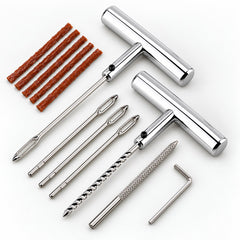
- If you find a nail or screw in the tread: a tire plug repair kit for an emergency fix
First, make sure it's really a leak
Every tire loses a little air over time. Ford's tire-care guidance puts it at about 1 psi a month, and pressure also drops roughly 1 psi for every 10°F (about 5.5°C) fall in outside temperature. So all four tires reading low on the first cold morning of the fall is the weather, not a leak.
A real leak looks different:
- One tire is always lower than the others
- It needs topping up every few days or weeks, not every couple of months
- The tire pressure (TPMS) warning keeps coming back for the same wheel
To measure it, inflate all four tires to the pressure on the sticker in the driver's door jamb, with the tires cold (before driving, or after the car has stood for a few hours). Check again at the same time of day over the next few days. How fast the pressure drops tells you how urgent it is.
How to find a tire leak with soapy water
Step 1: Inflate the tire
Pump the tire up to the door-jamb pressure. A nearly flat tire doesn't push enough air through a small hole to make bubbles. Never go above the maximum pressure printed on the sidewall.
Step 2: Check the valve
- Remove the valve cap and spray the tip of the valve. Bubbles at the tip mean the valve core inside is leaking.
- Spray the base of the valve stem, where it goes through the wheel. Bubbles there point to the stem or its seal.
- Gently bend a rubber stem to one side, then the other, and watch again. Old rubber stems crack with age and may only leak when flexed.
Always start with the valve. It's the easiest leak to fix and the easiest to miss.
Step 3: Check the tread
- Spray a section of the tread and look closely for growing bubbles or fine foam. Use a flashlight: tiny leaks make tiny bubbles.
- Look for nails, screws, glass or wire in the grooves while you're there.
- Roll the car forward about a quarter of a wheel turn and repeat until you've covered the whole tire, including the part that was against the ground.
- On a front tire, turn the steering to full lock so you can see and spray the inner part of the tread.
Step 4: Check the sidewalls
Spray both sidewalls as far as you can reach and look for bubbles, cuts, cracks or bulges. A bulge or bubble in the sidewall means internal damage: stop driving on that tire and replace it.
Step 5: Check the bead and the wheel
Spray all the way around the line where the tire meets the rim, on the outside and on the inside if you can reach it. Then spray the face and spokes of the wheel. Bubbles along the rim edge mean a bead leak. Bubbles coming from the metal itself point to a crack or a porous spot in the wheel.
Step 6: Mark every leak
Circle each leak with chalk and keep going. There can be more than one.
Still can't find it? Try the bucket test
A very slow leak sometimes won't show with a spray bottle. Taking the wheel off lets you check every surface, including the inner sidewall and the back of the wheel.
- Park on firm, level ground, set the parking brake and chock the wheel diagonally opposite.
- Loosen the lug nuts half a turn while the wheel is on the ground. Lift the car at the jacking point shown in your manual and support it on a jack stand. Never reach under a car held up only by a jack.
- Remove the wheel and make sure it's at normal pressure.
- Lower one section at a time into the water, or pour water over it section by section, and watch for a steady stream of bubbles.
- Mark the spot, refit the wheel, tighten the nuts in a star pattern and torque them to the figure in your manual.
What each leak means and how to fix it
Valve core leak
Turn the core clockwise with a valve core tool until it's just snug. Cores are small and easy to overtighten. Spray again. If it still bubbles, unscrew it, fit a new core and reinflate. Refit the valve cap afterward to keep dirt and moisture out of the valve.
Valve stem leak
A cracked rubber stem, or a leaking seal on the metal valve of a TPMS sensor, has to be replaced with the tire off the wheel. That's a quick job for a tire shop. It's worth asking for new rubber valve stems whenever you buy new tires.
Tread puncture
A nail, screw or other small object in the tread can usually be repaired properly by a shop, as long as the hole is no bigger than 1/4 inch (6 mm) and the tire hasn't been driven flat. Our guide to a nail in your tire explains when it's safe to drive to the shop. If you need to get moving first, a tire plug kit seals a tread puncture at the roadside as an emergency repair (see how to plug a tire), and the tire still needs checking by a shop afterward.
Bead leak
Air escaping between the tire and the rim is common on alloy (aluminum) wheels, where corrosion builds up on the rim's sealing surface, and on wheels that have hit a curb or pothole. The fix is to take the tire off, clean the sealing surface, apply bead sealer and remount it. That needs a tire machine, so it's a shop job.
Leaking wheel
Bubbles from a crack or a porous spot in the wheel itself need a wheel specialist or a new wheel. A cracked wheel isn't safe to keep using, so don't put it off.
Sidewall damage
A leak, cut or bulge in the sidewall can't be repaired. The tire needs replacing.
Is it safe to drive with a slow leak?
For a short time, if you keep the tire at the right pressure. The danger is the stretch between top-ups. An underinflated tire flexes more and builds heat, which NHTSA links to tread separation and tire failure, and a tire that has been driven flat usually can't be repaired. Check the pressure every day until it's fixed, and if it loses noticeable pressure during a single trip, fit the spare.
Mistakes to avoid
- Testing a nearly flat tire. Inflate it first or the bubbles won't show.
- Checking only the outer face. Leaks on the inner sidewall and the back of the rim are easy to miss.
- Stopping at the first leak. Mark it and finish checking the whole tire.
- Treating sealant as a fix. It can get you to a shop, but it isn't a repair.
- Plugging anything other than a tread puncture. A plug won't fix a valve, a bead, a wheel or a sidewall.
When to call a pro
If you can't find the leak, a tire shop can dunk the whole wheel in a tank in minutes. Go straight to a shop for bead leaks, stem leaks, wheel damage and anything on the sidewall. And if the tire went flat and you drove on it, have it inspected inside before you trust it again.
FAQ
Why does my tire keep losing air when there's no hole?
The usual suspects are the valve core, the valve stem, the bead seal against the rim, or the wheel itself. Spray each one with soapy water. If all four tires drop together when the weather turns cold, it's the temperature, not a leak.
Can a slow leak in a tire fix itself?
No. The pressure may seem to recover on a warm afternoon, but the leak is still there. A nail that's sealing its own hole can also start leaking faster at any time.
Can I use tire sealant for a slow leak?
In an emergency, it can get you to a shop. Tell the shop you used it, because they'll need to clean it out before a proper repair. At least one sealant maker says its product can stop a TPMS sensor working until the sensor has been cleaned.
How do I know if my valve stem is leaking?
Spray soapy water on the tip with the cap off, then on the base of the stem, then flex the stem gently and spray again. Bubbles at the tip mean the core. Bubbles at the base, or only when you flex it, mean the stem or its seal.
Do tires lose air in cold weather?
Yes. Pressure drops roughly 1 psi for every 10°F fall in temperature, even with no leak. Check and adjust your pressures when the seasons change, with the tires cold.
Browse all tire and roadside tools.