Nail in Your Tire? What to Do and Whether You Can Drive
If you find a nail in your tire (tyre), leave it in, check the pressure and look at exactly where it is. A nail in the tread of a tire that's holding air can usually be repaired, so drive gently to a tire shop soon. A nail in the sidewall or shoulder means the tire needs replacing, and if the tire is flat or losing air fast, don't drive on it: fit the spare instead.
What you need
- A tire pressure gauge
- A 12-volt inflator or a gas station air pump
- A spray bottle of water with a squirt of dish soap
- Chalk or a paint marker
- Your spare, jack and wheel wrench, in case the tire won't hold air
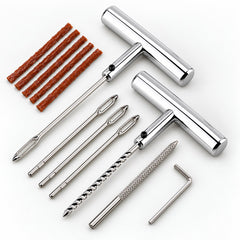
- For emergencies: a tire plug repair kit to seal a tread puncture at the roadside, if the tire passes the checks below
What to do first
- Leave the nail in. While it's in the hole, it usually slows the leak. Pull it out and a slow leak can become a flat within minutes.
- Get somewhere safe. If you spotted it on the road and the tire looks low, drive slowly to the nearest safe place to stop, not to the next town.
- Check the pressure. Compare it with the pressure on the sticker in the driver's door jamb (or in your manual), not the maximum printed on the sidewall.
- Find exactly where the nail is. This decides almost everything, as explained below. Roll the car forward a little if part of the tread is hidden against the ground.
- Mark it. Circle the nail with chalk so you, or the shop, can find it again quickly.
- Spray it with soapy water. Growing bubbles around the head mean air is escaping. No bubbles doesn't prove it's harmless: the nail may simply be sealing its own hole for now.
Where the nail is decides everything
In the tread: usually repairable
The tread is the flat part that touches the road. Repair guidance from the U.S. Tire Manufacturers Association (USTMA) allows a repair here when the hole is no bigger than 1/4 inch (6 mm) across, which covers a typical nail or screw. The shop still has to take the tire off the wheel and inspect the inside before deciding.
In the shoulder: replace the tire
The shoulder is the rounded edge where the tread turns down into the sidewall. USTMA guidance says damage that reaches the shoulder, or runs at an angle into it, must not be repaired, and if there's any doubt the tire comes out of service. A nail in the outermost tread block, right at the edge, may be judged too close. Be ready for the shop to say no.
In the sidewall: replace the tire
The sidewall flexes with every turn of the wheel, and no plug or patch is approved there. A nail in the sidewall means a new tire, even if it isn't leaking yet. Fit the spare rather than driving on it.
Can you drive with a nail in your tire?
It depends on the pressure and the location, not on the nail itself:
- Nail in the tread, holding pressure: yes, carefully, straight to a tire shop. Check the pressure before you set off and again when you arrive. Don't put it off for weeks: the nail can work deeper, or the leak can speed up.
- Losing air slowly: top it up to the door-jamb pressure and get to a shop the same day, checking again on the way. If it needs air more than once on a short trip, stop and fit the spare.
- Low, flat or losing air quickly: don't drive on it. Fit the spare, use a plug kit if the tire qualifies, or call roadside assistance.
- Nail in the sidewall or shoulder: fit the spare if you have one, and drive only as far as you need to replace the tire.
Why driving on a low tire ruins it
An underinflated tire flexes far more than it's designed to, and that flexing builds heat. NHTSA warns that this heat can lead to tread separation and tire failure. Drive on a tire while it's flat, even for a short distance, and the inside can be damaged in ways you can't see from outside. That's why Michelin says a tire that has been driven flat needs replacing, not repairing. A cheap repair turns into a new tire the moment you keep driving on a flat.
Don't wait for the warning light either. On US cars, the tire pressure monitoring system (TPMS) light only has to come on once a tire is 25% or more below the recommended pressure, so by the time it lights up, the tire is already well down.
Repair or replace?
A nail hole can be repaired properly only when all of these are true:
- The nail is in the tread, not the shoulder or sidewall
- The hole is no bigger than 1/4 inch (6 mm)
- The tire hasn't been driven flat or badly underinflated
- The repair won't overlap an earlier repair
- There's enough tread left (a tire at or near the legal wear limit should be replaced)
- For run-flat tires, the tire maker allows repairs (some don't, so check)
If any of these fail, the tire needs replacing. If they all pass, ask for a repair done from the inside with the tire off the wheel: the plug-and-patch method the industry treats as permanent. Our guide to tire plug vs patch explains why a plug on its own doesn't count.
The emergency option: plug it yourself
If the tire is losing air, you're far from a shop and the nail is clearly in the tread, a plug kit can get you moving again in a few minutes without lifting the car. You pull the nail, clean the hole with the spiral reamer, push in a rubber repair strip and inflate. Our step-by-step guide on how to plug a tire covers the full procedure and the checks to do first.
Be clear about what that is: an emergency repair for tread punctures only. Never plug the shoulder or sidewall, and never plug a tire that was driven flat. Afterwards, have the tire inspected by a shop. Depending on what they find and their policy, they'll repair it properly or tell you it needs replacing.
Mistakes to avoid
- Pulling the nail out to see what happens. Leave it until you're at a shop, or ready to plug the hole straight away.
- Ignoring it because it isn't leaking. A nail that seals today can leak tomorrow, and you won't know whether it's too close to the shoulder until someone looks.
- Driving on a soft tire to save a stop. The heat damage can cost you the whole tire.
- Inflating to the sidewall number. That's the tire's maximum, not your car's recommended pressure.
- Treating a roadside plug as finished. It's a way to reach a shop, nothing more.
When to call a pro
Take the car to a tire shop for any nail, even a small one in the tread: only they can check the inside. Call roadside assistance instead of driving if the tire is flat or going down quickly and you can't change it safely, if the nail is in the sidewall and you have no spare, or if you're on a busy road with nowhere safe to stop.
FAQ
Should I pull the nail out of my tire?
No, not until you're ready to deal with the hole. The nail usually slows the leak while it's in place. Pull it at a tire shop, or at the roadside only when you're about to plug the hole or fit the spare.
How long can you drive with a nail in your tire?
There's no safe number of miles. If the nail is in the tread and the tire holds its pressure, drive gently to a shop within a day or so and check the pressure on the way. If it keeps losing air, stop and fit the spare.
Can you drive on the highway with a nail in your tire?
Avoid it if you can. Higher speeds build more heat in the tire, and a sudden loss of air is far more dangerous at speed. If you have to, check the pressure first, keep your speed moderate and leave at the first place that can repair it.
Can a nail in the sidewall be repaired?
No. Repairs are limited to the tread area. A nail in the sidewall, or in the shoulder where the tread meets the sidewall, means the tire needs replacing.
There's a nail in my tire but it isn't losing air. Do I still need to fix it?
Yes. The nail may be sealing the hole for now, but it can work loose or deeper as you drive. Get it checked soon, while it's still a cheap repair and before the tire runs low.
Keep a tire plug kit in the trunk for the day a nail finds you far from a shop.
Browse all tire and roadside tools.